LEARN • PRACTISE • REFLECT • IMPROVE
Student Learning Resources by Lalit Kumar Mishra
These student learning resources bring together clarity tools, Chemistry education, books, workbooks, structured practice and mentoring guidance created by Lalit Kumar Mishra. Each resource is designed to help learners understand more deeply, act more consistently and improve through honest reflection.
Clarity → Understanding → Practice → Reflection → Progress
Understand
Build concepts and self-awareness
Practise
Apply learning purposefully
Reflect
Learn from effort and mistakes
Improve
Turn feedback into progress
Choose the Resource That Matches Your Present Need
Begin with the challenge you need to solve now. A focused resource used consistently is more valuable than collecting many materials without applying them.
Clarity & Personal Growth
For self-awareness, meaningful goals, direction, habits, confidence, reflection and purposeful action through The Clarity Blueprint Method™.
Chemistry Learning
For clearer concepts, structured revision, question practice, assessment and mistake analysis across Physical, Organic and Inorganic Chemistry.
Books & Workbooks
For students who want a structured reading path, guided exercises, written reflection, topic-wise practice and resources they can revisit independently.
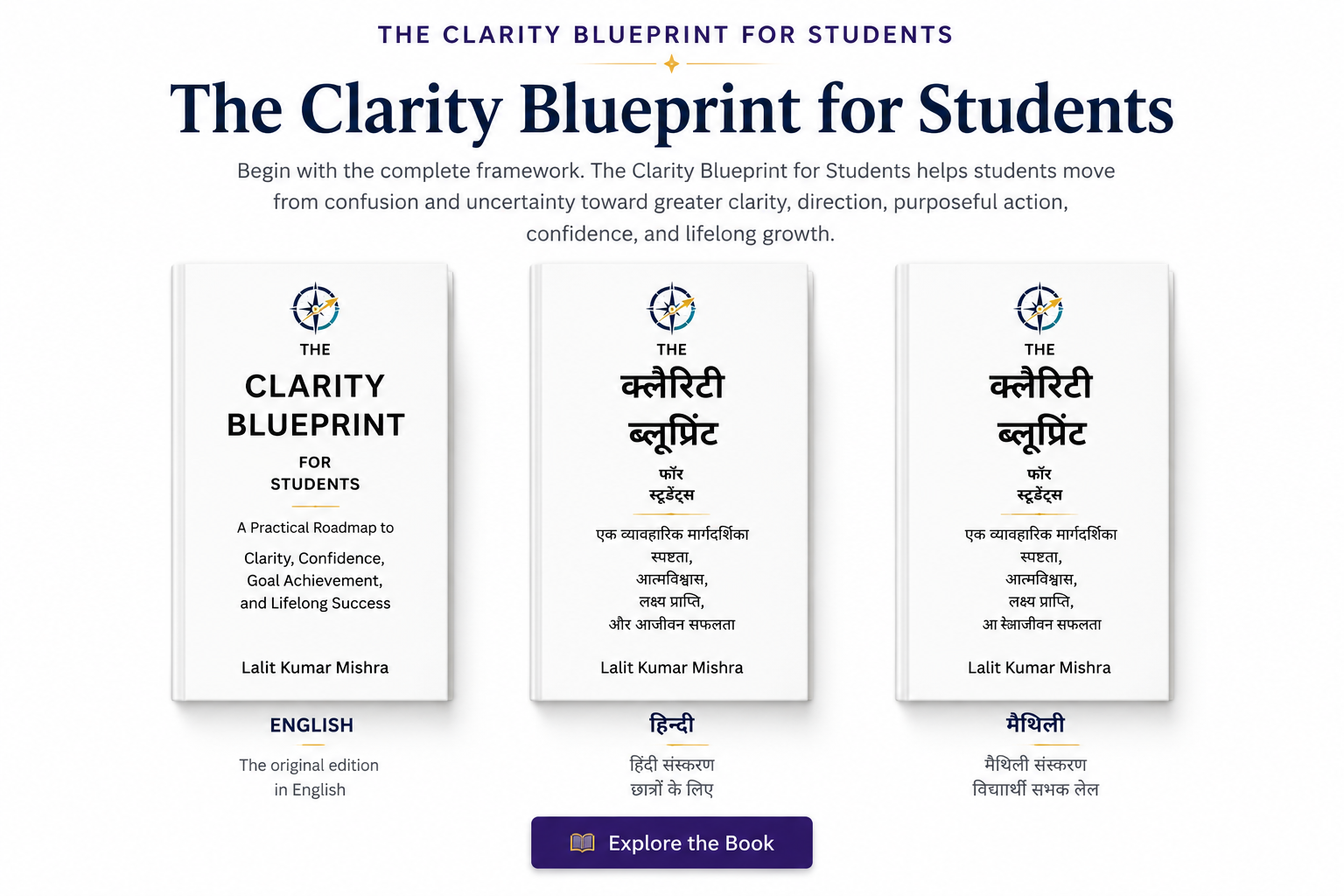
STUDENT CLARITY & PURPOSEFUL GROWTH
The Clarity Blueprint Learning Path
The Clarity Blueprint for Students, its transformational workbooks and guided tools help learners move from confusion to clarity, direction and consistent action. Students can read to understand the framework, write to personalise it and review their actions to create steady growth.
- Main books and transformational workbooks
- English, Hindi and Maithili editions
- Clarity, goal-setting and reflection tools
- Structured activities for purposeful daily action
CONCEPTS • REVISION • APPLICATION
Chemistry Education & Examination Support
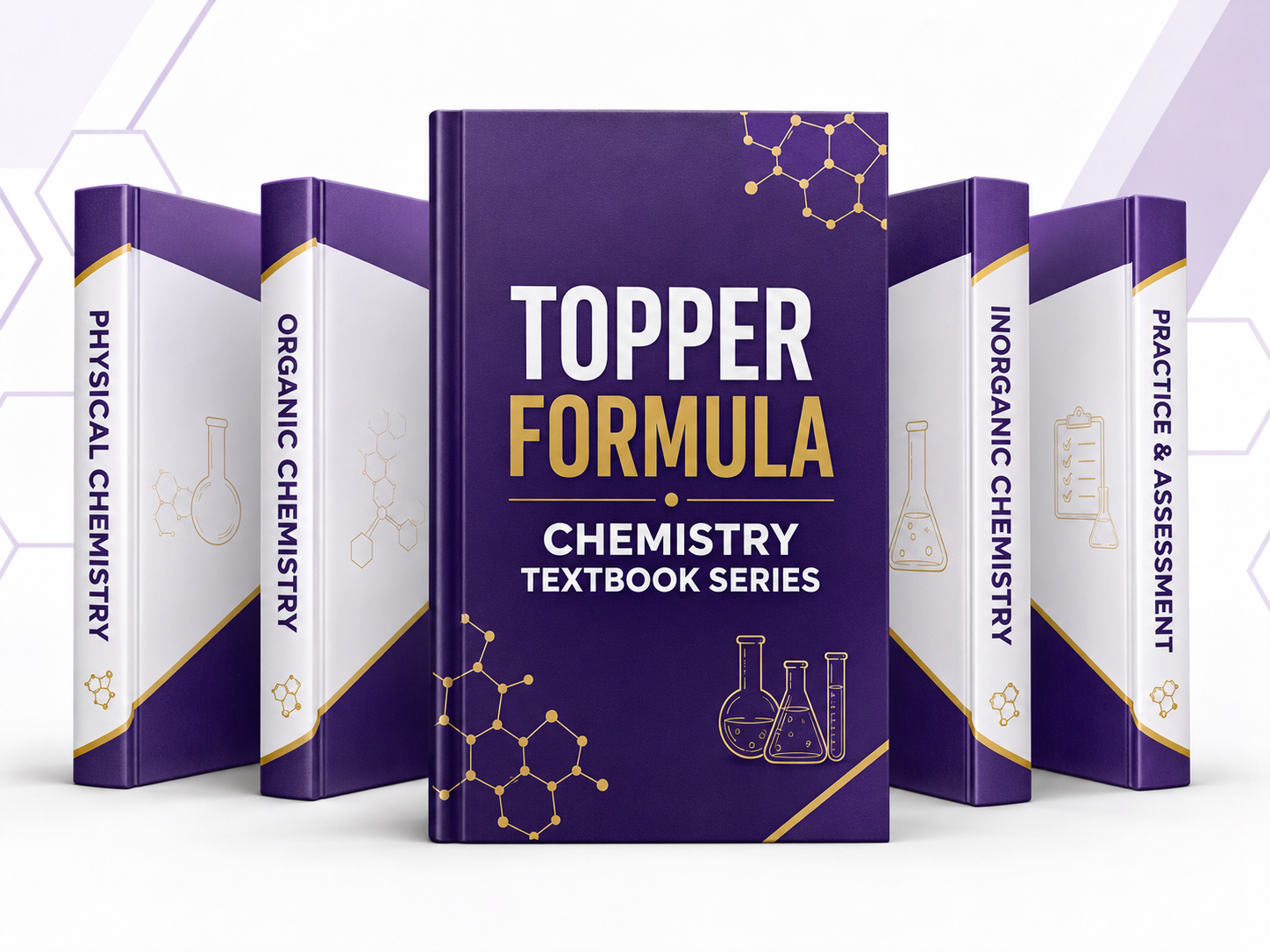
Drawing on more than 20 years of Chemistry teaching experience, Lalit Kumar Mishra develops resources that connect concept clarity with purposeful practice. The learning pathway covers Physical, Organic and Inorganic Chemistry for school education and relevant entrance-examination preparation.
- Concept explanations and worked examples
- Chapter-wise revision and active recall
- Question banks, assignments and structured tests
- Mistake analysis and targeted improvement
- Support for CBSE, ICSE, IB, JEE and NEET learners
Topper Formula materials are independent educational resources. They are not official publications of, or endorsed by, CBSE, NCERT or any examination body.
PRACTICE THAT PRODUCES FEEDBACK
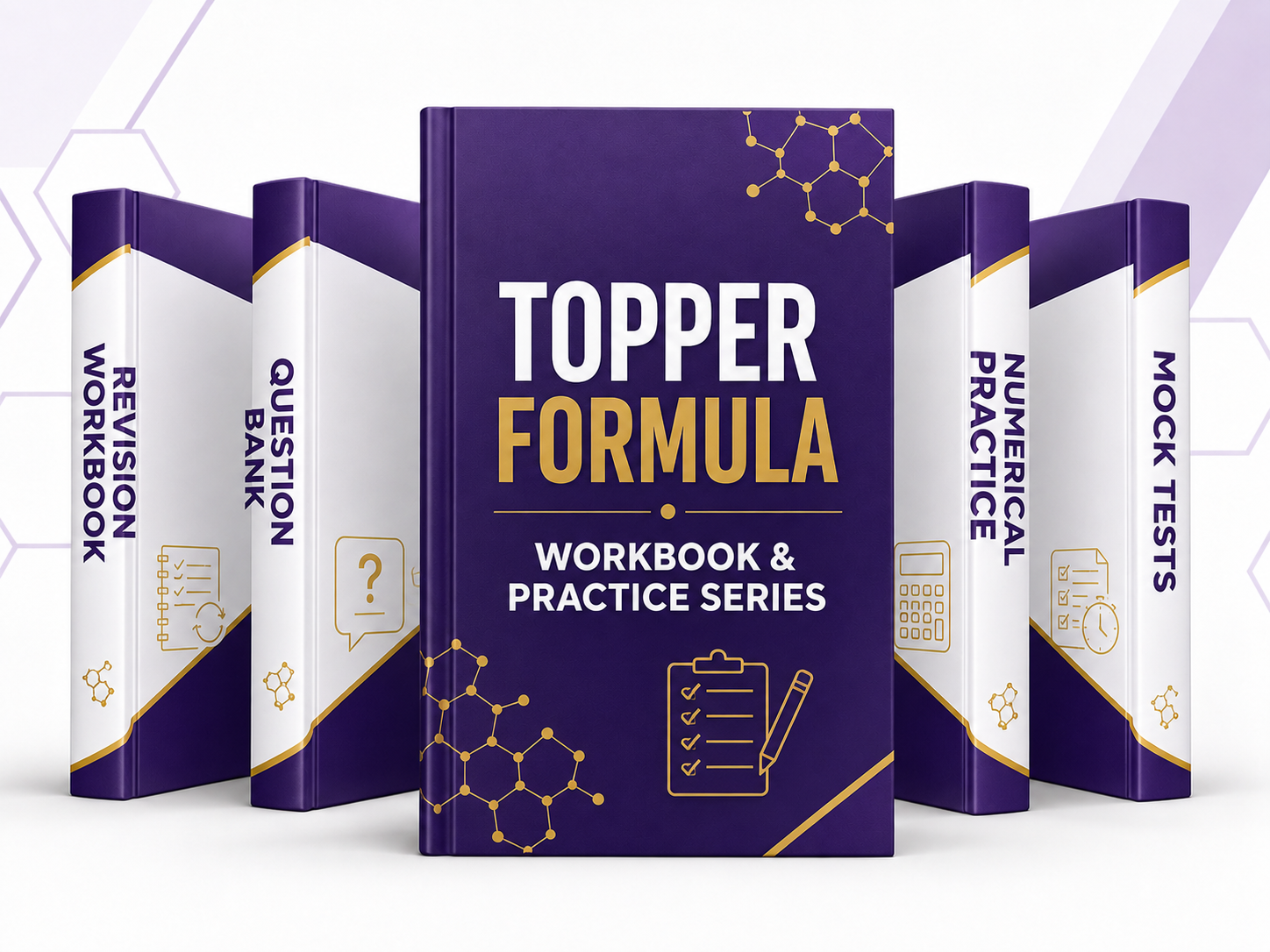
Workbooks, Question Banks & Practice Materials
Practice becomes valuable when it reveals what a learner understands, where mistakes occur and what must improve next. These workbooks and practice materials support written application, revision, assessment and constructive analysis rather than question completion alone.
- Guided reflection and written planning
- Topic-wise and progressive question practice
- Self-assessment and revision support
- Mistake tracking and improvement cycles
- Resources for independent and guided learning
How to Use These Student Learning Resources
A simple four-step process helps turn information into measurable personal or academic improvement.
1. Identify
Define the current challenge, goal or learning gap clearly.
2. Choose
Select one suitable book, tool or practice resource.
3. Apply
Complete the reading, written work or practice consistently.
4. Review
Analyse progress and decide the next improvement step.
Resources for Students, Parents and Educators
Students
Build clearer concepts, stronger study habits, meaningful goals, independent practice and confidence grounded in preparation.
Parents
Use practical frameworks to understand a child’s needs, support constructive routines and guide progress without excessive comparison or pressure.
Teachers & Mentors
Find reflection prompts, planning structures and practice approaches that connect learning with responsibility, confidence and growth.
Frequently Asked Questions
What student learning resources are available on this website?
The website connects students with The Clarity Blueprint books and workbooks, Chemistry textbooks and practice materials, reflection and goal-setting tools, structured learning support and guidance for choosing suitable resources.
Who creates these learning resources?
The resources are created or curated by Lalit Kumar Mishra, an educator, Chemistry specialist, Student Success Mentor, author and Founder of Topper Formula, drawing on more than 20 years of teaching and mentoring experience.
Who can use these resources?
They are primarily designed for students and young people. Parents, teachers and mentors can also use relevant books, reflection questions, planning structures and practice approaches to support learners constructively.
Are all resources free?
No. Some tools and learning materials may be offered free, while printed books, workbooks, courses or personalised mentoring may be paid. Each linked platform or resource page provides the applicable availability and access information.
How should a student choose the right resource?
Begin by identifying the immediate need: conceptual understanding, examination practice, clarity about goals, stronger habits, reflection or individual guidance. Choose one resource that directly addresses that need and use it consistently before adding more.
What is the difference between a book and a workbook?
A book primarily builds understanding through explanations, examples and a structured roadmap. A workbook requires active written participation through questions, exercises, reflection, planning, practice and progress tracking.
Are The Clarity Blueprint resources available in different languages?
The main book and transformational workbook have editions in English, Hindi and Maithili. Availability may differ by format or publishing platform, so visitors should check the Books page or official Clarity Blueprint website for current access details.
Which Chemistry areas do the learning materials cover?
The Chemistry learning pathway covers Physical, Organic and Inorganic Chemistry through concept explanations, revision support, assignments, question practice, assessment and mistake analysis.
Can these resources support CBSE, ICSE, IB, JEE and NEET learners?
Relevant Chemistry resources are designed to support concept development and practice for learners following these school or entrance-examination pathways. Students should always match a resource with their current syllabus, class level and examination requirements.
Do these resources replace a teacher or personalised mentoring?
No. Well-designed resources can strengthen independent learning, but some students need explanation, feedback, accountability or a personalised plan. A teacher or mentor can help when difficulties remain unresolved or progress becomes inconsistent.
Do the resources guarantee examination success or a particular result?
No responsible educational resource can guarantee a particular result. Progress depends on the learner’s starting point, effort, consistency, practice quality, feedback and application. The resources provide structure for improving these factors.
How can I ask which resource is suitable for a student?
Use the Contact page to share the learner’s class or study level, present challenge and desired outcome. Lalit Kumar Mishra can then suggest the most relevant existing resource or guidance pathway without promising a specific result.
Choose One Clear Next Step
Explore the books, understand The Clarity Blueprint Method™, visit Topper Formula for academic learning, or contact Lalit Kumar Mishra when a student needs help choosing the right starting point.